
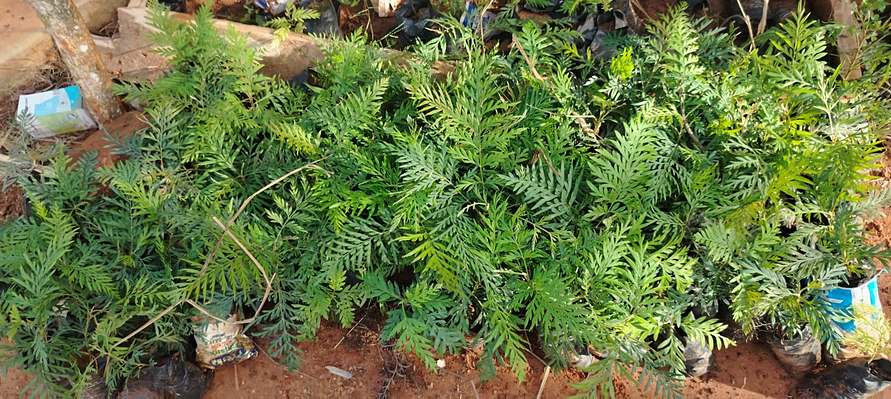
The seedlings that go into the ground on a planting day started their journey months earlier in a nursery bed. Sourcing is done with community nurseries close to the planting sites — shorter trips mean less stress on the seedlings and money staying with local growers.
A planting-ready seedling is not the tallest one in the bed. We look for a sturdy stem, a balanced root ball in its bag or tube, and healthy new growth. Seedlings that have been pushed too fast with heavy feeding often look impressive and then stall or collapse in the field, so we favour steady, hardened stock over showy stock.
Hardening off is the step most people never see. For the last stretch before transport, seedlings get less water and more direct sun so they toughen to field conditions. Skipping this step is one of the commonest causes of early losses, so it is part of the checklist for every batch.
On the eve of a planting day, the batch is sorted, counted and packed into crates — the work you can see in the videos on our home and Get Involved pages. Each crate is counted again on site, and the count that goes into the field record is the number that actually went into the ground, not the number that left the nursery.
Any seedlings left over at the end of a day go back to the nursery or to the host's own bed, never into a ditch. If a host wants to raise their own seedlings for the next season, we help them set that up — a school nursery is often the best environmental club a school can have.